If you're reading this, chances are you've just walked into a house that used to feel like home and now feels like a puzzle you never asked to solve. Maybe it's your mother's place, or an aunt who left everything to you, or a spouse whose closet you still can't bring yourself to open. There is no clean way to do this. But there is a kinder way, and after two decades of helping families across Stroudsburg and the wider Poconos, I've learned what makes the difference between a cleanout that scars people and one that lets them breathe again.
This isn't a listicle written to fill space. It's the guide I wish somebody had handed me the first time I stood in a hallway holding a box of a stranger's Christmas cards, unsure what I was allowed to throw away. Take it at your own pace.
Before you touch a single thing
The instinct is to start filling bags. Resist it for a day or two. The most expensive mistakes in an estate cleanout happen in the first frantic hours, when a well-meaning relative tosses an envelope that turns out to hold savings bonds, or donates a jacket with cash sewn into the lining. Older folks who lived through hard winters and harder decades often hid money and paperwork in strange places. I've found deeds inside cereal boxes and jewelry taped under drawers.
So walk the house first. Slowly. Open drawers and closets just to look, not to sort. Get a feel for what you're dealing with before you make a single decision you can't take back.
Secure the valuables and the paper trail
Your first real job is protective, not productive. Before anything leaves the house, gather and lock away anything financial, legal, or irreplaceable. That means:
- Documents: the will, deeds, titles, insurance policies, tax returns, bank and brokerage statements, Social Security card, birth and marriage certificates, military discharge papers.
- Financial instruments: checkbooks, savings bonds, stock certificates, uncashed checks, credit and debit cards (to be canceled).
- Valuables: jewelry, watches, coins, firearms, cash, and anything that looks like it might be worth appraising before you'd ever consider parting with it.
- Keys and access: spare car keys, safe-deposit box keys, digital passwords if you can find them.
Put all of it in one locked box or take it to your own home the same day. If there's a safe you can't open, don't force it and don't leave it. Photograph everything of value as you go. This record protects you if a family member later asks where something went, and believe me, someone usually asks.
Sort in three piles, not ten
Once the sensitive material is secured, the physical work begins, and it goes faster when the categories are simple. Room by room, sort into three groups: keep, give, and go. Keep is for anything that will be inherited, sold, or donated with intention. Give is for family, friends, and charities. Go is for what's genuinely done, the broken and the worn and the truly worthless.
Do one room at a time and finish it before you move on. A half-sorted house is demoralizing; a single finished room is proof you can do this. Bedrooms and the kitchen tend to hold the most emotional weight, so consider starting somewhere neutral like a basement, garage, or spare room to build momentum.
The sentimental items, handled with care
This is the part that stops people cold. You can't keep everything, and you shouldn't, but you also can't treat a lifetime like landfill. A few practices that have helped the families I work with:
Photograph the things you can't keep. A picture of your grandfather's worn recliner holds the memory without holding the square footage. For the pieces that truly matter, keep the object itself, not the whole set. One teacup can carry as much love as the full china cabinet.
Give sentimental items time and daylight. Don't make final calls on photos, letters, and heirlooms at 11 p.m. when you're exhausted and raw. Box the maybes, label them, and revisit when you're steadier. And let the small things be small. It's okay to keep a ticket stub or a handwritten grocery list if it makes you feel close to them. Grief doesn't follow a spreadsheet.
Working with family without a war
I've seen the cleanout itself go smoothly and the family fall apart over a single lamp. Objects become stand-ins for love, fairness, and old wounds, so tread gently. A few ground rules save a lot of heartache.
Get everyone in the same room, or at least the same phone call, before the sorting starts. Let people name the two or three items that matter most to them while the emotions are still manageable. When two relatives want the same thing, take turns choosing rather than arguing, or draw straws and honor the outcome. Write down who's taking what, not because anyone's dishonest, but because memory is unreliable and grief makes it worse. And accept that you cannot make everyone happy. Aim for fair and finished, not perfect.
If a family member simply can't participate because the loss is too fresh, let them step back without guilt. Someone has to do the heavy lifting, and it doesn't have to be everyone.
Donation versus disposal
Far more leaves an estate than most people expect, and a lot of it can do good instead of filling a landfill. Around here, gently used furniture, housewares, and clothing find eager homes through local charities and thrift shops, and many will pick up larger pieces. Books, tools, and kitchen goods move quickly. What's stained, broken, or unsafe belongs in the disposal pile, and that's nothing to feel bad about.
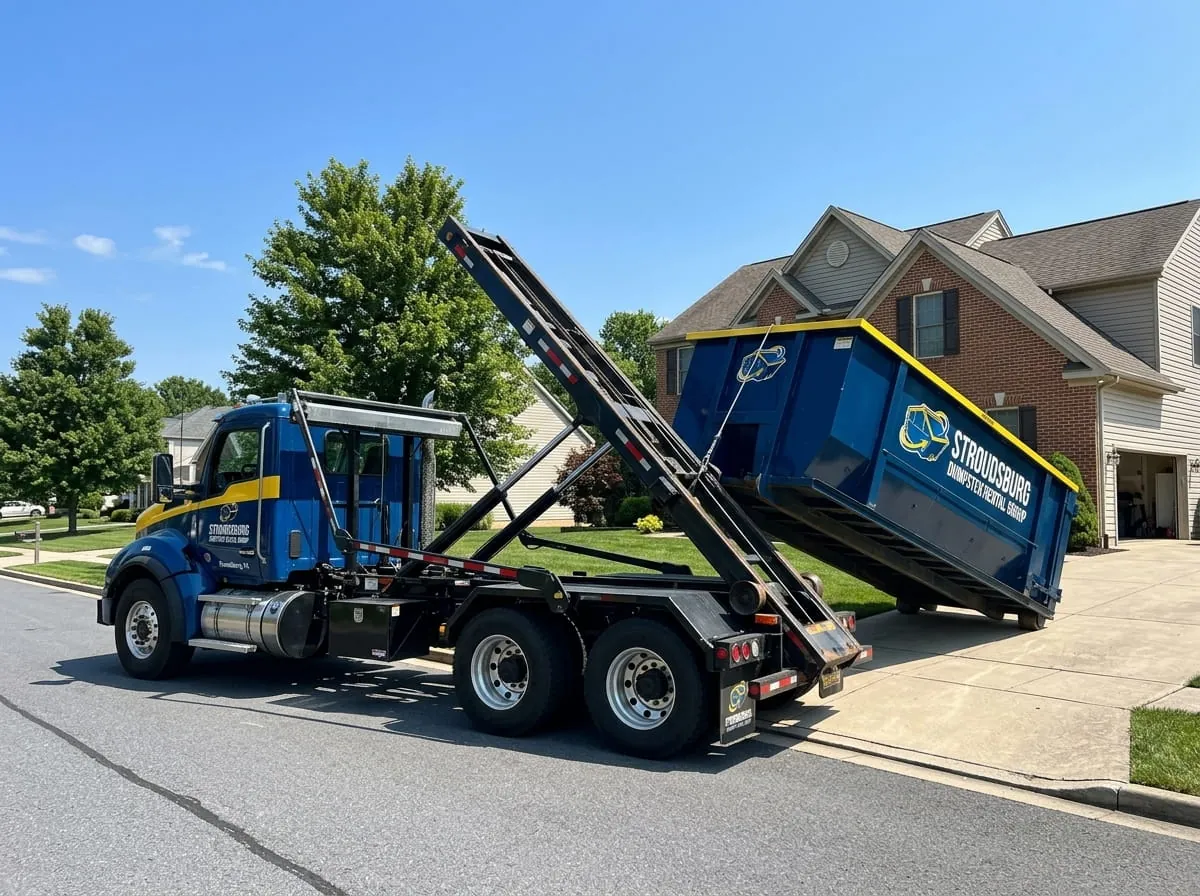
Be realistic, though. Not everything sells or donates, and hauling a truckload to three different drop-offs while you're grieving is its own kind of cruelty. For the sheer volume that a full house generates, a single container on-site is usually the sanest path. Our estate cleanout service is built around exactly this situation, and for the odd heavy or awkward item that shouldn't go in the bin, junk removal can take it off your hands.
Need a hand or just an honest answer about where to start? Call Stroudsburg Dumpster Rental Group at (272) 200-0759 and talk to a real local who has done this before.
Executor timelines and the paperwork clock
If you're the executor, you're carrying a legal duty on top of an emotional one, and the two don't run on the same schedule. In Pennsylvania, the estate has to be inventoried and the assets accounted for, which is another reason that photo record and that locked box of documents matter so much. Don't dispose of anything that could be part of the estate's value until you've spoken with the estate attorney or the register of wills in Monroe County.
Practically, that means the cleanout usually happens in two waves. First you secure and inventory. Then, once you've got the go-ahead and the family has claimed what they're claiming, you clear the rest. Rushing the disposal before the estate is settled can create real headaches, so let the paperwork lead and the dumpster follow. If the house needs to be sold or handed back to a landlord by a certain date, work backward from that deadline and give yourself more time than you think you'll need.
Choosing the right dumpster size
People almost always underestimate how much a lived-in house holds, especially one where someone stayed for thirty or forty years. Here's a rough guide for our area:
- 10-yard: a small apartment, a single room, or a partial cleanout. Good for heavy debris in modest amounts.
- 15-yard: a small home or a decluttering that stops short of the whole house.
- 20-yard: the workhorse for most estate cleanouts. A two- to three-bedroom home with furniture, boxes, and the accumulation of decades usually fits here.
- 30-yard: a large home, a full-property clear-out, or a house with a packed basement, garage, and attic all coming out at once.
When you're unsure, size up. Paying a little more for a container that holds everything beats the cost and the emotional toll of ordering a second one, or worse, stopping the job halfway because you ran out of room. A quick phone call describing the house is usually enough for us to steer you right.
Doing it with dignity
Here's the thing nobody tells you: an estate cleanout, done well, is one of the last acts of care you'll perform for someone you loved. It doesn't have to be cold. Play their music while you work. Take breaks. Let yourself sit in their chair one more time. Cry if you need to, then keep going.
Be gentle with yourself about the pace, too. Some families finish in a weekend; others need a month of afternoons. Both are fine. The goal isn't speed. It's finishing in a way you can live with afterward, without regret over something you tossed too fast or a fight that didn't need to happen.
You don't have to carry this alone. Whether you need a container in the driveway, an honest recommendation on size, or just someone who understands what you're walking into, we're a local call away. When you're ready, reach out and we'll make our part of this as simple as it can be, so you can spend your energy on the part that actually matters.

Founder, Stroudsburg Dumpster Rental Group — sharing straight advice from more than 15 years of local hauling experience.
Frequently Asked Questions
Where should I start with an estate cleanout?
Start by walking the whole house slowly without throwing anything away, then secure all valuables, financial items, and legal documents in one locked place. Only after the sensitive material is protected should you begin sorting room by room into keep, give, and go piles. Beginning in a neutral space like a basement or garage helps build momentum before you reach the emotional rooms.
What should I do before disposing of anything if I'm the executor?
As executor in Pennsylvania, you have a duty to inventory and account for the estate's assets, so don't dispose of anything with potential value until you've checked with the estate attorney or the Monroe County register of wills. Photograph valuables, keep documents secured, and let the paperwork lead. Most cleanouts happen in two waves: secure and inventory first, then clear the rest once you have the go-ahead.
What size dumpster do I need for a house cleanout?
For most estate cleanouts of a two- to three-bedroom home with furniture and decades of belongings, a 20-yard dumpster is the workhorse choice. Smaller apartments or partial jobs may fit a 10- or 15-yard, while large homes with packed basements, garages, and attics often need a 30-yard. When in doubt, size up, and call us to describe the home so we can steer you right.
How do I handle sentimental items without keeping everything?
Photograph the things you can't keep so the memory survives without the square footage, and keep one meaningful piece rather than a whole set. Give yourself time and daylight for big emotional decisions instead of making them late at night, and box the maybes to revisit later. It's completely okay to keep small keepsakes like a note or ticket stub if they help you feel close.
Can you help with donation and junk removal too?
Yes. Gently used furniture, housewares, and clothing can often go to local Poconos charities, some of which pick up. For the large volume a full house creates, an on-site dumpster is usually the simplest path, and for heavy or awkward items that shouldn't go in the bin, our junk removal service can take them. Call (272) 200-0759 and we'll help you sort out the right approach.